ANRF Sponsored & Springer Approved International Conference BEDAIML-2026
International Conference on Advancements in Modular Power Electronics, Resilient Energy Systems and Intelligent Computing Technologies (Innovate, Integrate and Transform for Sustainable Development) :AMRITCON 2027, is envisioned as a comprehensive academic forum dedicated to advancing knowledge, innovation, and responsible technological development in the domains of computing, electronics, energy systems, and intelligent infrastructure. The conference seeks to bring together researchers, academicians, industry professionals from various domains to engage in meaningful discourse on emerging technologies and their role in addressing contemporary societal and environmental challenges. This conference aims to foster interdisciplinary collaboration, promote ethical and responsible innovation, and contribute to capacity building by disseminating high-quality research that supports societal progress and sustainable development.
The conference seeks to bring together researchers, academicians, industry professionals from various domains to engage in meaningful discourse on emerging technologies and their role in addressing contemporary societal and environmental challenges. This conference aims to foster interdisciplinary collaboration, promote ethical and responsible innovation, and contribute to capacity building by disseminating high-quality research that supports societal progress and sustainable development.
About Institute
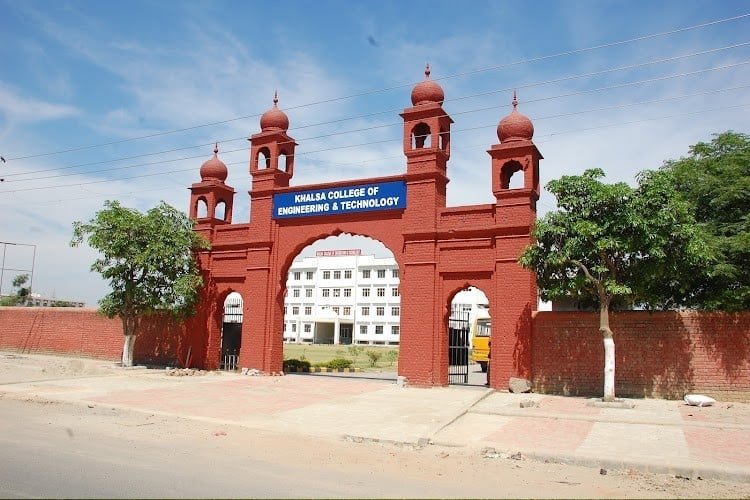
Khalsa College of Engineering and Technology, Amritsar established in 2009 by the 134-year-old, prestigious Khalsa College Charitable Society Amritsar, our Institute has emerged as a premier destination for higher education in the sacred city of Amritsar. With a steadfast commitment to academic excellence, the college has expanded exponentially both vertically and horizontally. Latest collaboration AWaDH CPS (Cyber-Physical Systems) Lab in collaboration with IIT Ropar, Virtual Lab Nodal Centre in collaboration with IIT Roorkee, AICTE sponsored IDEA lab, setting up of Centre of Excellence by Aditya Birla-Ultra Tech Cement in the Civil Department of the college and Central Institute of Petro Chemical Engineering for up grading industry-related courses. Our institute is widely known for its academic excellence and work-ethos and our alumni are making their mark in prestigious organizations and industries in India and Overseas. Students from all across India and the rest of the world come to our institute to study because of our forward-thinking instructional strategies, warm and inviting environment, and emphasis on additional skills to complement the primary curriculum
About NIT Delhi
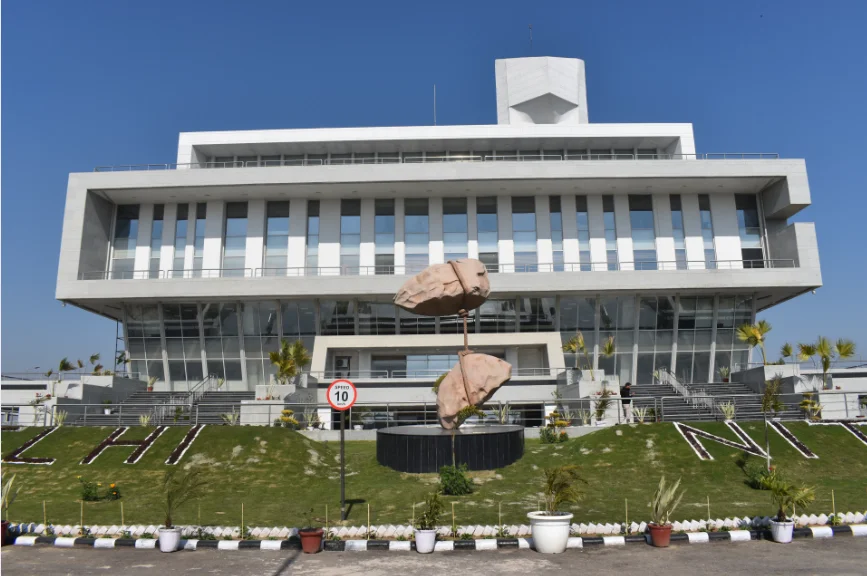
The National Institute of Technology Delhi (NITD), established in 2010 by an Act of Parliament, is one of the thirty-one NITs in India and has been recognized as an Institute of National Importance. Spanning fifty-one acres, its permanent campus has been allocated on NH-44, GT Karnal Road, Delhi-110036, promising a state-of-the-art environment for academic excellence and innovation.
NIT Delhi is an autonomous Institute which functions under the aegis of Ministry of Education, Government of India. It aims to provide instructions and research facilities in various disciplines of Engineering, Science and Technology, Management, Social Sciences and Humanities for advance learning and dissemination of knowledge.
The Institute has secured a remarkable NIRF 45 rank in 2024 among 4000 engineering colleges in India.
About Conference


International Conference on Advancements in Modular Power Electronics, Resilient Energy Systems and Intelligent Computing Technologies (Innovate, Integrate and Transform for Sustainable Development): AMRITCON 2027, is envisioned as a comprehensive academic forum dedicated to advancing knowledge, innovation, and responsible technological development in the domains of computing, electronics, energy systems, and intelligent infrastructure. The conference seeks to bring together researchers, academicians, industry professionals from various domains to engage in meaningful discourse on emerging technologies and their role in addressing contemporary societal and environmental challenges. This conference aims to foster interdisciplinary collaboration, promote ethical and responsible innovation, and contribute to capacity building by disseminating high-quality research that supports societal progress and sustainable development.
The conference emphasizes on the development of intelligent systems capable of supporting data-driven decision-making, automation, and digital transformation across multiple sectors. It will also promote research that enhances computational efficiency, system reliability, and ethical deployment of advanced technologies while ensuring inclusivity, security, and transparency. Particular attention is given to approaches that integrate intelligence at the edge, ensure privacy, and support large-scale, distributed, and resilient systems. A strong focus is placed on the convergence of software, hardware, and communication technologies to enable smart environments, connected infrastructure, cyber-physical systems, design, implementation, and optimization of embedded and electronic systems supporting next-generation connectivity, sensing, and real-time interaction.
Sustainability forms a core pillar of the conference, with emphasis on clean energy systems, efficient power management, intelligent control, and mobility solutions that contribute to reduced environmental impact and enhanced energy security. Research that supports energy transition, grid resilience, and sustainable transportation is particularly encouraged, aligning with global sustainability goals and national development priorities. The conference also highlights transformative applications that enhance human well-being through intelligent automation, immersive technologies, and advanced human–technology interaction. It provides a platform to explore future-oriented innovations that augment human capabilities, improve accessibility, and enable safer and more efficient interaction between humans and intelligent systems.
Objectives of the Conference
To provide an international platform for dissemination of high-quality research addressing technological, societal, and environmental challenges.
To promote interdisciplinary research and collaboration across computing, electronics, energy, and intelligent systems.
To encourage development of sustainable, secure, and socially responsible technological solutions.
To bridge the gap between academic research and real-world industrial and societal applications.
To support capacity building among researchers, students, and professionals in emerging and future technologies.
IMPORTANT DATES
| Event | Date |
|---|---|
| Call for Papers | 01 September 2026 |
| Full Paper Submission Opens | 01 September 2026 |
| Full Paper Submission Deadline | 31 March 2027 |
| Acceptance Notification | 31 May 2027 |
| Camera Ready Paper Submission | 30 June 2027 |
| Early Bird Registration | 30 June 2027 |
| Regular Registration | 31 July 2027 |
| Conference Dates | 14–16 October 2027 |
Conference Tracks & Registration Fees
A. Artificial Intelligence, Machine Learning & Computational Intelligence
- Artificial Intelligence, Machine Learning & Deep Learning
- Generative AI, Large Language Models & Responsible AI
- Computational Intelligence, Algorithm Design & Optimization Techniques
- Machine Learning and Generative AI Applications
- Conversational Systems & Autonomous Decision-Making
B. Data Science, Vision & Intelligent Information Processing
- Data Science, Big Data Analytics & Predictive Modelling
- Computer Vision, Pattern Recognition & Image Processing
- Natural Language Processing, Speech & Text Technologies
- Computer Vision and Autonomous Systems
C. Cloud, Edge, Distributed & High-Performance Computing
- Cloud Computing, Edge Computing & Serverless Architectures
- High Performance Computing (HPC) and Cloud Systems
- Grid Computing, Bioinspired Computing & Quantum Computing
- Edge AI, Federated Learning & Distributed Intelligence
- Privacy-Preserving Computation & Secure AI Workflows
D. Software Systems, Cybersecurity & Blockchain Technologies
- Software Engineering, DevOps & Secure Coding Practices
- Cybersecurity, Cryptography & Network Security
- Blockchain, Web 3.0 & Distributed Ledger Technologies
- Blockchain Technologies (AI-Integrated Systems)
- Digital Twins & Cyber-Physical Systems
E. Quantum & Emerging Digital Technologies
- Quantum Computing, Quantum Communication & Algorithms
- Quantum Technologies (Systems, Applications & Security Implications)
F. AI for Society, Governance & Healthcare
- AI for Sustainable Development & Smart Governance
- AI Ethics, Accountability & Responsible Innovation
- AI and ML in Healthcare
A. Embedded Systems, IoT & Cyber-Physical Platforms
- Embedded Systems and Internet of Things (IoT)
- IoT Platforms, Middleware & Smart Application Frameworks
- Sensor Network and Data Acquisition
- Cyber-Physical Systems (CPS)
B. Communication Technologies & Wireless Innovations
- Next-Generation Wireless Communication: 5G, 6G & Beyond
- Sensor Networks, Wearable Electronics & Biomedical Devices
- New era RF & Microwave Communications
- Wireless, Optical Fiber, and Sensor Networks
C. VLSI, Semiconductors & Hardware Technologies
- VLSI Design, System-on-Chip (SoC)
- Semiconductor Technologies
- Network on Chip (NoC)
- ASIC Design
- FPGA Design
- Wide Bandgap and Ultra-Wide Bandgap Devices and Applications
- Power Electronic Converter Topologies
- Modular Power Converters
- AC-DC, DC-DC, DC-AC, and AC-AC
- Modelling and Control of Power Converters
- Grid-Forming Inverters
- Resonant Power Converters, Soft-Switching Techniques
- Solid-State Transformers
- Multilevel Converters
- EMI/EMC in Power Electronic Systems
- Electrical Drives and EV Drivetrain System
- Control Strategies for Power Converters
- Intelligent Control of Power Converters
- Robust Control, Adaptive and Predictive Control
- Model Predictive Control
- Optimal Control, Evolutionary and Swarm Intelligence-Based Control
- Nonlinear Control of Power Converters
- Digital Control of Power Electronic Converter
- Digital Twin-Based Control and Optimization
- EVs, Light Electric Vehicles, Hybrid EVs, Fuel-Cell EVs
- Autonomous Vehicles, More Electric Aircraft
- Special Electrical Machines
- Hyperloop and Next-Generation Transit
- Charging Technologies: Wireless Chargers, DC Fast Chargers, On-Board, and Off-Board Chargers
- Battery Management Systems and
- Charging Station Planning
- Vehicle-to-X (V2X)
- Hybrid AC/DC Grids, DC Microgrids, and Smart Grids
- Power System Resilience
- Waste to Energy
- Hydrogen Technologies, Fuel-Cells, and Green Hydrogen Production
- Battery Technologies
- V2G and G2V Integration
- Energy Transition and Decarbonization
- AI and ML for Smart & Sustainable Infrastructure
- Digital Twin and Virtual Prototyping
- Artificial Intelligence and Machine Learning for Energy Systems
- Hardware-in-the-Loop and Real-Time Simulation
- Autonomous Energy Systems
- Cyber-Physical Energy Systems
- Quantum Technologies for Energy Applications
- Data-Centres /Telecom Power Supplies
- Power Electronics/Energy Systems for Railway, Aerospace, and Marine Electrifications
- Power Electronics in Electrolyze and Fuel cell systems
- Solid-State Lighting and Electronic Ballasts
- Biomedical Applications
- High Power Charging Infrastructures
- Defence and Military Power Electronic
| Registration Fee Details (Inclusive of GST) | ||||
|---|---|---|---|---|
| Author Category | Early Bird (Indian) | Early Bird (Foreign) | Regular (Indian) | Regular (Foreign) |
| IEEE Member | 8000 INR | 325 USD | 10000 INR | 375 USD |
| Non-IEEE Member | 9000 INR | 425 USD | 11000 INR | 475 USD |
| Society Membership such as IAS, IES (Optional) | 7000 INR | 275 USD | 9000 INR | 325 USD |
| IEEE Student Member | 6000 INR | 250 USD | 8000 INR | 300 USD |
| Non-IEEE Student Member | 7000 INR | 275 USD | 9000 INR | 325 USD |
| Society Student Membership (optional) | 5500 INR | 225 USD | 7500 INR | 275 USD |
| Charges per additional accepted paper by the same author | 50% of the first-paper registration fee | |||
| Per Page charges for Additional Pages | 1000 INR | 20 USD | 1000 INR | 20 USD |
| Delegates / Participants | |
|---|---|
| Category | Fees |
| Non-IEEE Member | 3000 INR / Day |
| IEEE Member | 2500 INR / Day |
| Non-IEEE Student Member | 2000 INR / Day |
| IEEE Student Member | 1500 INR / Day |
| Gala Dinner | 2500 INR |
❖ Predictive maintenance and smart diagnostics
❖ Intelligent robotics and automation
❖ Digital twins and simulation-based design
❖ AI in materials processing and optimization
❖ Startups and student-led prototypes
- ❖ AI in structural health monitoring
❖ Machine learning for construction management
❖ Intelligent transportation systems
❖ Sustainable infrastructure design with AI tools
- ❖ AI in embedded systems and VLSI
❖ Intelligent signal processing
❖ IoT and sensor networks for smart systems
❖ Communication networks enhanced by ML
- ❖ Deep learning applications in engineering
❖ Computer vision for engineering inspection
❖ Edge computing and AI at scale
❖ Software frameworks for engineering AI
- ❖ Deep learning applications in engineering
- ❖ Cross-domain case studies combining multiple
engineering fields
❖ Hybrid AI-engineering models for disaster
prediction and management
❖ Cyber-physical systems and digital transformation in
engineering
❖ Ethics, safety, and trust in AI-enabled engineering
| Registration Fees | ||||
|---|---|---|---|---|
| Registration Type | With ISBN | With Late Fees | With Scopus Indexed Springer Series* | With Late Fees |
| National Authors/Participants | ||||
| Academician/Researcher | 3000 | 3500 | 7000 | 7500 |
| Students | 2500 | 3000 | 6500 | 7000 |
| Attendees | 1000 | 1500 | 1000 | 1500 |
| International Authors/Participants | ||||
| Academician/Researcher | $150 | $155 | $250 | $255 |
| Students | $100 | $105 | $200 | $205 |
| Attendees | $100 | $105 | $100 | $150 |